


Guia Completo para Ter um Alojamento Local Legal em Portugal (2026)
Tudo o que é obrigatório no AL: segurança, extintores, sinalética, ASAE, documentação e regras essenciais
Abrir um Alojamento Local em Portugal nunca foi tão simples. Hoje, em poucas horas, qualquer proprietário consegue criar um anúncio no Airbnb ou Booking.com e começar a receber reservas.
O problema é que muitos alojamentos começam a operar sem perceber verdadeiramente o que significa estar legal.
Na prática, ter um número de registo AL não significa automaticamente que o alojamento esteja preparado para uma fiscalização da ASAE, da Autoridade Tributária ou até de uma seguradora em caso de acidente.
É precisamente aqui que surgem muitos dos problemas mais comuns no setor:
- extintores fora de validade
- ausência de manta ignífuga
- falta de livro de reclamações
- sinalética incorreta
- capacidade acima da permitida
- ausência de documentação obrigatória
- incumprimentos de segurança
This guide was created to bring together, in one place, everything a property owner or manager truly needs to know in order to operate a professional, safe and fully legal short term rental in Portugal.
More than just a simple checklist, the goal is to explain in a practical way:
- what is mandatory
- what is only recommended
- how to correctly install safety equipment
- the most common mistakes
- and what inspectors usually verify in practice.
What is considered a Short Term Rental in Portugal?
The Portuguese Short Term Rental framework is regulated under Decree-Law no. 128/2014, later amended by several legal updates, including the recent Decree-Law no. 76/2024.
In simple terms, a short term rental property refers to any accommodation that provides temporary lodging services to tourists in exchange for payment and that does not qualify as a traditional tourist enterprise or hotel.
The most common categories are:
- apartments
- villas and houses
- private rooms
- guesthouses
Although many owners still view short term rentals as a relatively informal activity, the reality today is very different. There is now a growing level of legal, operational and technical responsibility associated with the sector.
And this begins with the basic safety requirements.
Safety requirements in Portuguese short term rentals
One of the biggest questions for new property owners relates to safety equipment. Is a fire extinguisher enough? Is a fire blanket mandatory? Is there a correct height for safety signage?
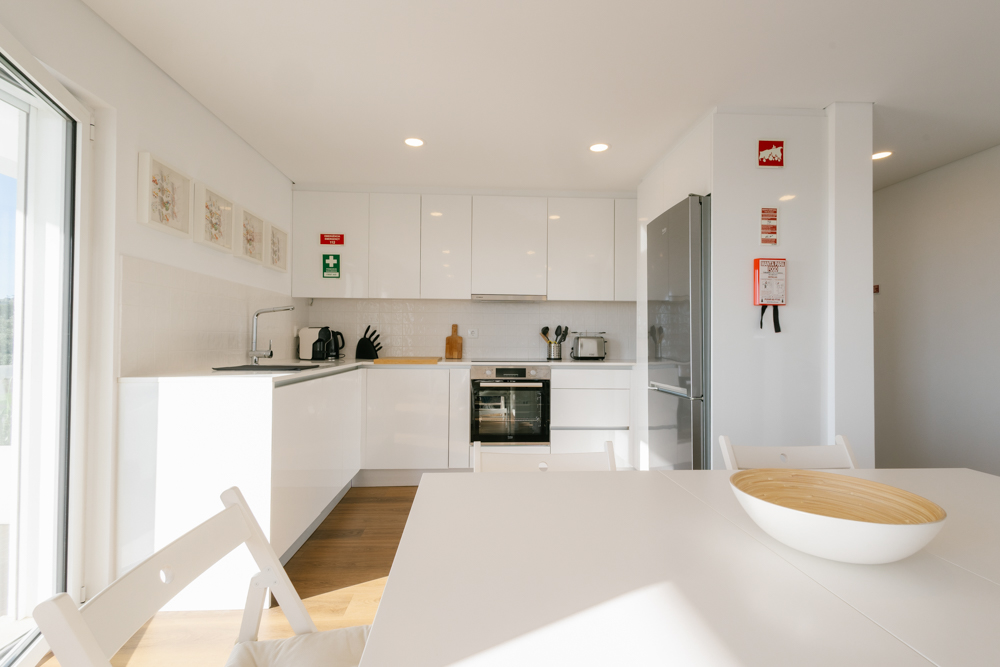
In practice, Portuguese legislation requires short term rentals to have basic fire safety equipment, especially in higher-risk areas such as kitchens and circulation zones.
The best-known item is naturally the fire extinguisher.
Most Portuguese short term rentals use a 6 kg ABC fire extinguisher, suitable for electrical fires, domestic appliances, kitchens and common solid materials found in residential accommodation.
However, one of the most common mistakes is purchasing the equipment simply to “tick the box” and then hiding it inside cupboards or behind doors.
In an emergency, seconds matter.
The extinguisher should always remain easily accessible, visible and installed in a strategic area of the property, usually:
- near the entrance
- in the main hallway
- or close to the kitchen.
Installation should also follow good fire safety practices. The top of the extinguisher should generally not exceed approximately 1.20 m from the floor, allowing fast and intuitive access.
Photoluminescent safety signage should be installed above the extinguisher, usually positioned between 2 m and 2.5 m in height. This allows guests to quickly identify the equipment even during power failures or smoke situations.
Another mandatory item is the fire blanket.
Although often forgotten, it is extremely important in kitchens, especially for small fires involving cooking oil or stovetops.
The blanket should be positioned close to the kitchen area, but never directly above the heat source. The objective is to ensure that guests can safely access the equipment without approaching the fire itself.
A first aid kit and visible display of the national emergency number 112 are also mandatory.
While smoke detectors and carbon monoxide detectors may not always be legally required in smaller properties, they are now strongly recommended. Besides significantly improving guest safety, they are highly valued by insurance companies and may become extremely important in liability situations.
Mandatory AL plaque and safety signage
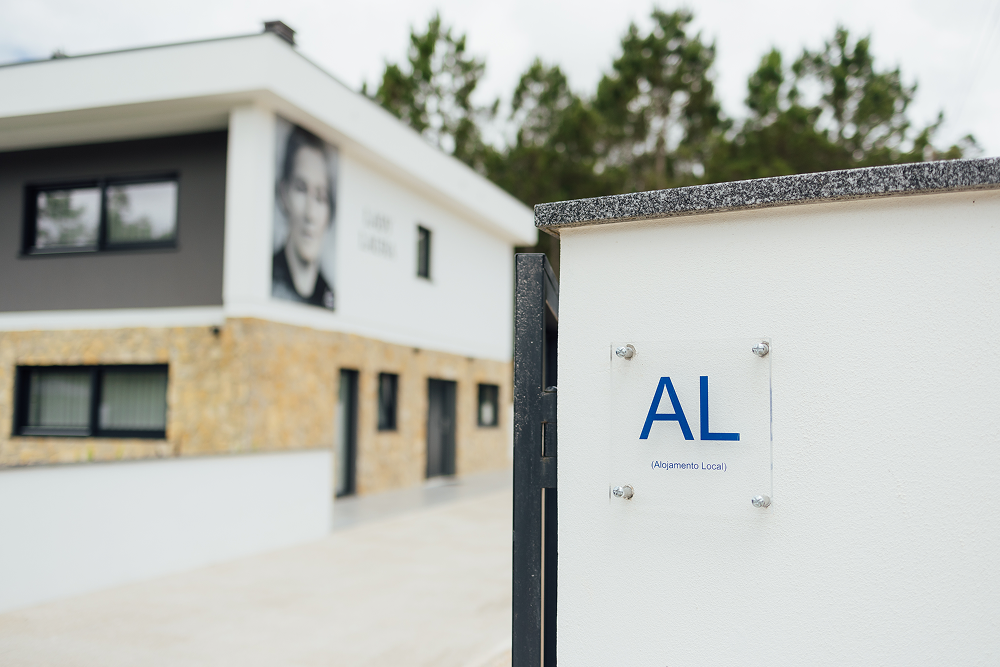
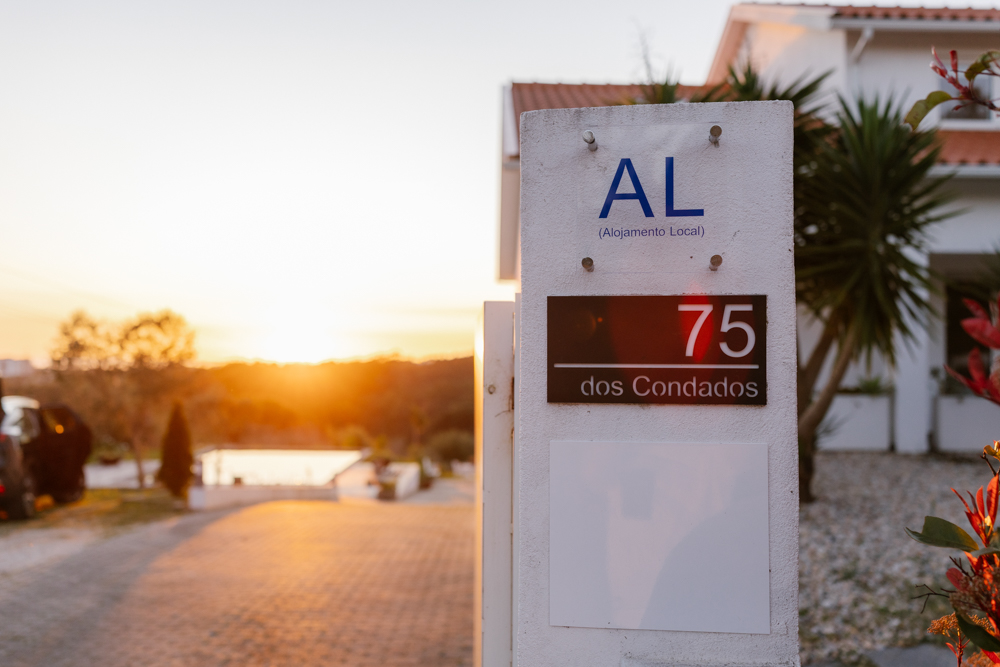
Many property owners believe that simply displaying the registration number somewhere near the entrance is enough. However, Portuguese legislation requires an official “AL” plaque to be visibly installed outside the property.
The plaque must be positioned near the main entrance and follow the legally approved format.
In addition, there are several mandatory or strongly recommended notices and signs:
- complaints book information
- emergency contacts
- house rules
- important guest information
In practice, proper signage does not only serve legal compliance purposes. It also communicates professionalism, organisation and trust.
The guest information book: one of the most overlooked requirements
If there is one document consistently neglected in many Portuguese holiday rentals, it is the guest information book.
However, this document is mandatory and should contain essential information for guests, including:
- house rules
- appliance instructions
- safety information
- emergency contacts
- condominium rules
- waste disposal instructions
- equipment usage guidelines
- contact details for the property manager or owner
Portuguese legislation also requires this information to be available in:
- Portuguese
- English
- and at least two additional foreign languages.
In practice, the most common language combination is:
- Portuguese
- English
- Spanish
- French.
A properly structured guest information book significantly improves the guest experience while reducing operational problems during the stay.
Mandatory insurance for short term rentals in Portugal
Insurance is another area frequently overlooked by property owners.
The property should have adequate insurance coverage for the activity, usually through:
- multi-risk insurance
or - liability insurance.
The policy should cover damages caused to guests or third parties related to the accommodation activity.
In the event of accidents, fires or serious damage, the absence of proper insurance coverage can result in extremely significant financial consequences for the owner.
What does ASAE usually inspect?
When inspections take place, authorities usually focus on practical and operational aspects.
The most frequently verified elements include:
- validity of the AL registration
- correct display of the registration number in online listings
- fire extinguisher maintenance validity
- fire blanket
- complaints book
- guest information book
- hygiene conditions
- maximum occupancy
- mandatory signage
- safety conditions
- insurance documentation
- compliance with operational rules.
One of the biggest mistakes is assuming that small issues are irrelevant. In reality, many fines result from the accumulation of several seemingly minor non-compliances.
Apartments and villas: are the rules different?
Sim.
In apartments, the most sensitive issues are usually related to:
- noise
- shared common areas
- neighbour relations
- condominium rules
- waste management
- building access.
In villas and standalone houses, inspections tend to focus more on:
- swimming pools
- uneven surfaces and stairs
- protective barriers
- outdoor areas
- barbecue zones
- outdoor lighting
- exterior safety conditions.
When the accommodation exceeds certain occupancy limits, especially above 10 guests, additional fire safety requirements under the Portuguese SCIE regulations may apply, including:
- reinforced safety signage
- emergency lighting
- additional evacuation measures
- extra safety equipment.
In these situations, professional technical support is strongly recommended.
Why does all of this matter?
For many years, the Portuguese short term rental market operated relatively informally.
Today, the reality is completely different.
Guests are more demanding, platforms have stricter requirements, municipalities are increasing inspections and insurance companies are paying much closer attention to non-compliance cases.
More than simply avoiding fines, legal compliance communicates:
- safety
- professionalism
- reliability
- operational quality.
And ultimately, this directly impacts the reputation of the property and the guest experience.
Conclusion
Running a legal short term rental in Portugal involves far more than simply creating an online listing.
Safety, documentation, guest information and technical compliance are now essential components of any professional hospitality operation.
In an increasingly competitive market, the best properties are no longer only the most beautiful or the cheapest. They are the ones capable of transmitting trust, organisation and safety from the very first interaction until the end of the guest’s stay.
Investing in a professional operation is not just about complying with the law. It is about protecting guests, owners and the long-term future of the property itself.
Bibliography and Official Sources
- Decree-Law no. 128/2014 of 29 August
- Decree-Law no. 76/2024
- Portuguese Legal Framework for Local Accommodation
- Portuguese National Authority for Emergency and Civil Protection (ANEPC)
- Portuguese Food and Economic Safety Authority (ASAE)
- Turismo de Portugal
- Portuguese Fire Safety Regulations for Buildings (SCIE)
- Ordinance no. 1532/2008
- Law no. 102/2009
- Portuguese technical standards applicable to fire safety signage and firefighting equipment
Onde Ficar na Figueira da Foz
do mar e da natureza faz toda a diferença.
Descubra a nossa coleção de casas cuidadosamente selecionadas ao longo da costa.

Deixe um comentário